How some regional areas are outshining others - John McGrath
In a trend that began late last year, regional locations across Australia again outpaced capital cities in the three months to July, although the gradual slowdown noticeable in the first quarter continued.
Cotality’s Regional Market Update this month, which examines the country’s largest regional areas, found that Western Australia recorded the strongest selling conditions in the country. Together with South Australia, the state also recorded the highest quarterly growth.
Some regional hubs on the East Coast experienced weakened sales and rental conditions; but many smaller inland towns are becoming increasingly popular for their affordability.
Gerard Burg, Cotality’s Head of Research, points to higher interest rates, less borrowing capacity, and more price-sensitive and cautious buyers as key reasons why these more selective markets are emerging, and why they’re experiencing more demand.
“As higher-value markets lose momentum and buyers become more cautious, we’re seeing demand swing to more relatively affordable regional centres,” he said.
This swing is one I want to explore further as it means the popularity of some locations is ebbing, and being replaced by smaller, up-and-coming areas.
Firstly, let’s look at the twin cities of Maryborough and Hervey Bay on Queensland’s Fraser Coast. About three hours north of Brisbane’s CBD, and 30 minutes inland of coastal Hervey Bay, Maryborough’s population grew by just 4.7% between FY2017 and FY2025, according to Fraser Coast Regional Council figures.
Hervey Bay resident numbers expanded by 17.8% in the same period. Up 9.7% on the past year, Hervey Bay’s median price is now $824,533. Annual listing numbers have improved in the coastal city while sale numbers have lessened; therefore, giving buyers an excellent opportunity to buy near a beach.
In addition, renters in this city have enjoyed the highest quarterly and annual rental declines of Australia’s larger regional centres.
Meanwhile, smaller inland Maryborough recorded a highly notable annual increase of 17.8%, bringing its median dwelling price to a very affordable $612,349. Weekly median rents are now $561, following one of the few quarterly rental declines in the Regional Market Update.
Like Hervey Bay, Maryborough’s annual sales listings have improved on a year ago, and again, sale numbers are slightly lower.
In NSW, property markets in some coastal towns in NSW are moderating as well, as inland centres gain recognition.
All the same, many of these coastal hubs are offering notable value growth, and like our mid-sized capitals, their recent strong results have given them a good buffer against downturns.
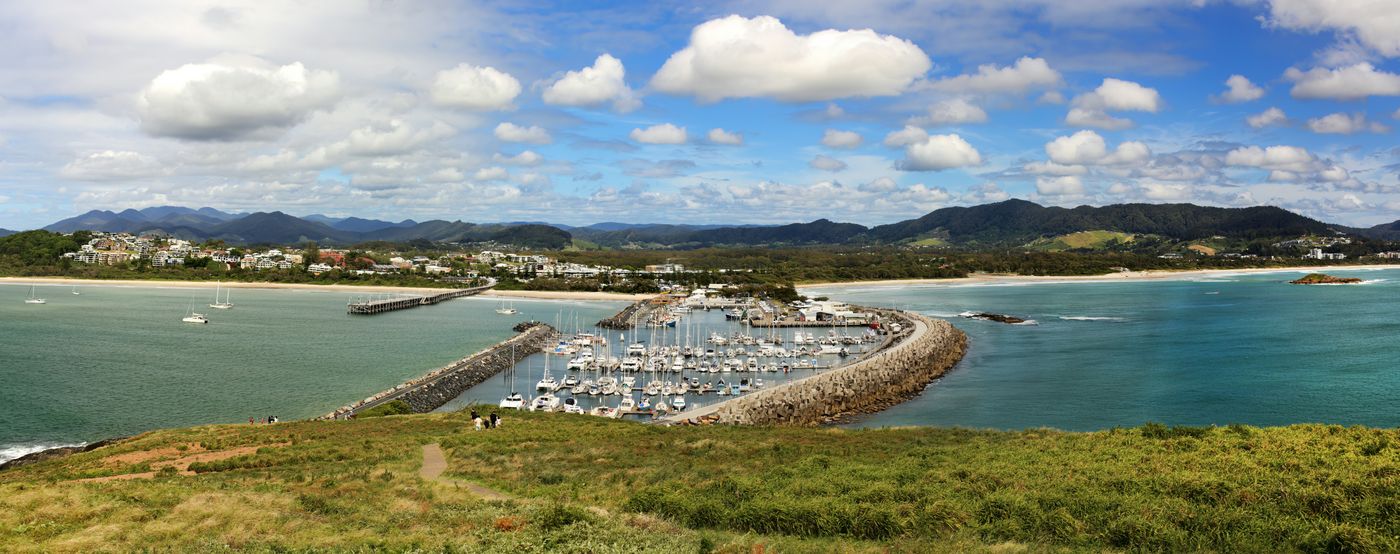
For example, Coffs Harbour and Nelson Bay’s annual gains of around 3.4% to 5.9% were lower than some other inland cities. But these increases are still beneficial as is their median values of $866,761, and just over $1.02 million, respectively.
The twin border towns of Albury-Wodonga, Tamworth in the north-eastern New England region and Dubbo in Central West NSW continued to experience solid quarterly growth of between 2% to 3.9%. Median values in these centres now stand at an attractive $622,555 to $688,935.
It was the same in regional Victoria, with Geelong as well as Warragul and Drouin, 100km south-east of Melbourne’s CBD, recording quarterly value declines. But again, these cities’ good recent upticks have given them a buffer against such downturns.
Finally, inland cities like the coal mining hubs of Traralgon and Morwell have experienced the highest annual change in sales (42.4%). This is despite its sales listing numbers being 35.3% lower than a year ago.
Our regional areas are undergoing a correction that is almost on par with our capital cities, and smaller towns are now the places to watch. With Spring beginning tomorrow, this point is especially significant for buyers looking for affordability and growth.

By
John McGrath
August 30, 2026
2 min read
Share this Article