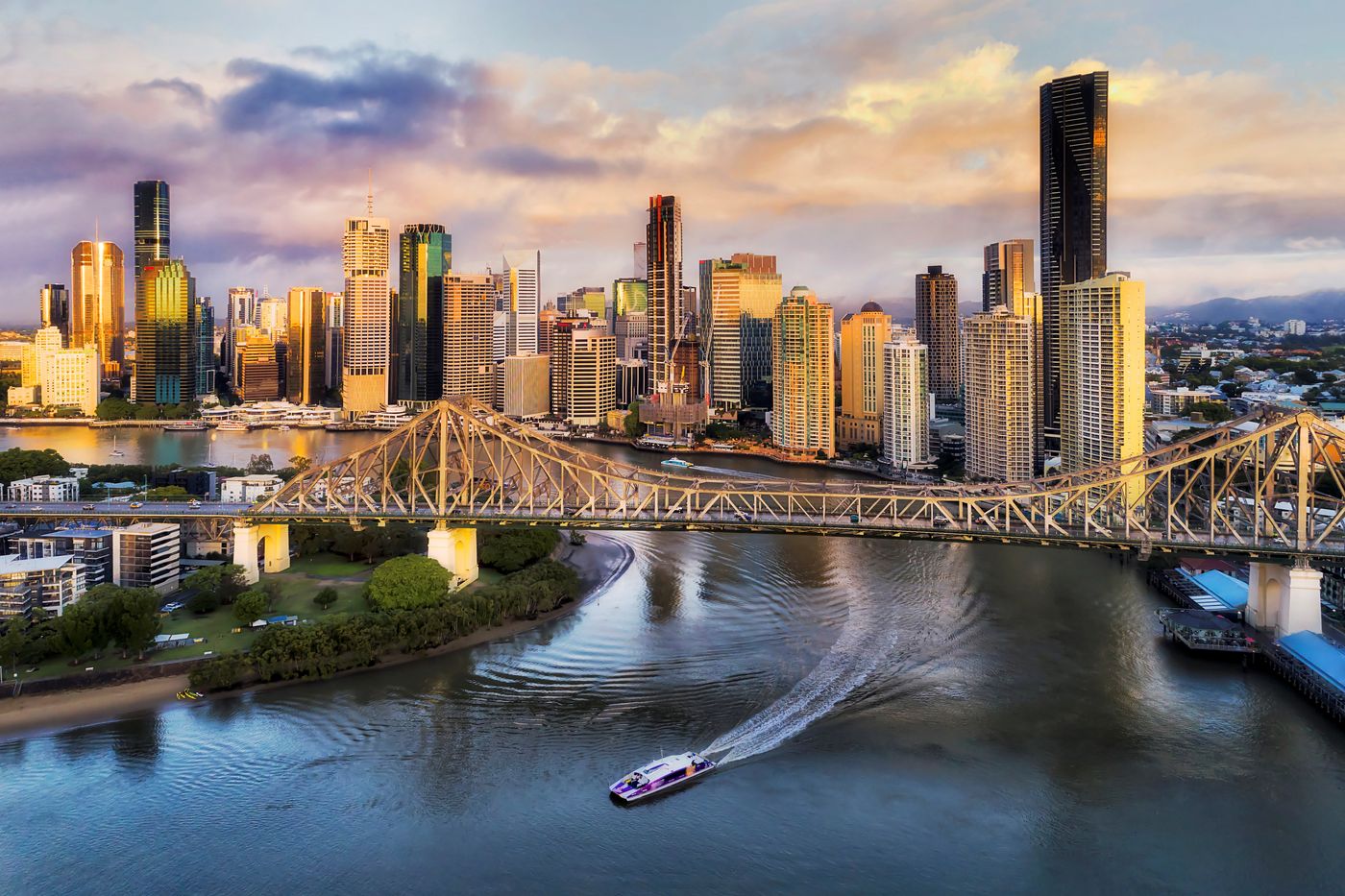
Brisbane’s property market continues to shine in 2026 – John McGrath
It’s no secret that Brisbane is by far the most the attractive capital city in Australia, with property values experiencing impressive growth in recent years. This growth is expected to continue in 2026, although it may moderate in the second half of the year as affordability bites.
At $1,131,329, Brisbane’s median house values are now only one place behind Sydney, according to Cotality’s Home Value Index this month, after surpassing $1 million for the first time in May 2025. The same report showed units in the Sunshine State capital city experienced strong growth as well, with their $807,161 median value also second only to Sydney and following a 16.9% yearly lift. These figures come on the back of Brisbane dwelling prices rising 92.5% in the past decade – the highest of any capital city in the country.
We discuss Brisbane’s extraordinary property growth, as well as its uplifts in other areas, in our recently released McGrath Report 2026.
Firstly, data from Australian Bureau of Statistics shows Brisbane’s population grew by 72,900 people in FY24, to reach 2,780,100. Queensland also included the country’s largest growth area outside a capital city, with the Sunshine Coast’s Caloundra West-Baringa region seeing population numbers grow by 2,500. *
Helping to drive Brisbane’s property and population uptake are the multiple developments being prepared for the 2032 Olympic and Paralympic Games. The most notable of these include a 63,000-seat, $3.6 billion stadium at Victoria Park; a $1.2 billion, National Aquatic Centre, which will be developed next to the stadium, and adjacent to an existing pool site; and an Athletes Village at the Brisbane Showgrounds in Bowen Hills.
Then, there’s the many public transport expansions underway. The Cross River Rail comprises a 10.2 km rail line with 5.9 km of twin tunnels running under the Brisbane River and CBD and four new underground stations. Construction on this project is now underway and is expected to be completed by 2029.
The Brisbane Metro bus network, launched in June 2025, features 50 electric and bi-articulated (or bendy) buses, which link the city centre to nearby suburbs. Also part of the network are two “turn up and go” electric bus routes with Brisbane City Council planning to develop more in the future.
The $235 million Beams Road overpass in Brisbane’s rapidly-growing northern suburbs, is due for completion in late 2026, and will help reduce congestion during peak traffic time. The new overpass bridge will replace a rail level crossing with boom gates.
And, the State Government’s $18.53 billion Hospital Rescue Plan is Queensland’s highest ever investment in hospital infrastructure. The project aims to deliver 2,600 new beds across the state by 2032 with new hospitals to be built, while existing ones will be upgraded.
Infrastructure growth is also assisting the Darling Downs gateway area in outer-west Brisbane to become a strategic property hotspot. Incorporating Ipswich, Toowoomba, Gatton and Laidley, the region includes Australia’s newest airport and the only privately-funded, public one, Toowoomba Wellcamp Airport.
The Melbourne to Brisbane Inland Rail will also benefit this region, with the 1,600km, 12-section freight super highway between Victoria, NSW and Queensland already bringing hundreds of construction jobs to these states.
Meanwhile, first home buyers continue to be a major part of the property market, thanks in large part to government assistance such as the Federal Government’s expanded Home Guarantee Scheme. The State Government also expanded its $30,000 First Home Owner Grant until June 2026, for property purchases where the house and less is valued at under $750,000. And, the Boost to Buy scheme works as a shared equity scheme, with the Queensland Government able to reduce first home buyers’ property deposit gap.
In the meantime, 2026 tenants in Brisbane are facing an annual uplift of 6.2% in house prices and 6.6% for apartments, based on Cotality’s HVI report this month. However, Cotality also highlighted that although rents are rising, home values are rising even faster, which is pushing gross rental yields lower. In Brisbane, this means such figures were again second only to Sydney for the country’s lowest numbers, with investors experiencing a gross rental return of just 3.4%
With Brisbane’s property market figures likely to remain positive in 2026, if more moderated, buyers can still benefit in the Sunshine State’s capital city, especially it’s outer-ring areas.
Check out my top suburb picks in Brisbane in the McGrath Report 2026.
*ABS March 2025

By
John McGrath
January 26, 2026
3 min read
Share this Article